



Good project managers create predictability and deliver results as agreed, or better. They create engagement and momentum in the team and have satisfied customers. But what makes them really good?
We have extensive experience working with project managers. In total, we have seen over 300 project managers and project owners in various industries, which enables us to say what the truly great project managers do to be the best. In this article, we share our knowledge with you, and hope you will find tips and advice on how you can develop into a better project manager.
Good project managers are good leaders
Our experience is that the most skilled project managers emphasize and master the leadership dimension of the role as project manager. There are many professional elements within project management that can be learned in courses, by reading good books or watching Ted talks on various topics. But the leadership role is a practical discipline that is developed through testing, experiencing and learning. And not least – learning from good project manager colleagues. The good project managers are not afraid to take advice, share the knowledge they have or help others develop. After all, that is their job!
Three important building blocks – trust, clarity and progress
As with all management, project management can be made complicated or simple. We like to keep it simple, so let's stick to the three building blocks of management: Trust, Clarity, and Progress.
These building blocks don't cover every aspect of management, but they do cover the most important ones. And if you master them, you will most likely do a good job as a project manager.
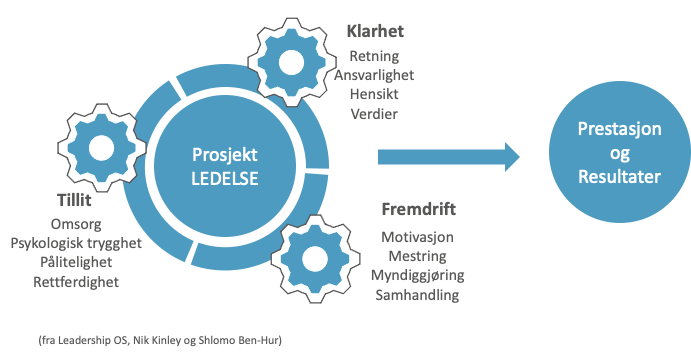
- Trust is fundamental to making project teams work. If you have trust in your leader, you will go the extra mile to ensure success. If you have trust internally in the team and in the leader, then people dare to speak up about problems and they dare to challenge and disagree so that you and the team can find the best solutions.
- Clarity is the shared understanding within the team about what we are going to achieve together, the goals that will lead to success. Clarity ensures that we are in agreement on how we will work together, who is responsible for what, and so on.
- In progress lies energy, drive and perseverance. Experiencing progress creates a sense of mastery, motivation and team spirit. This in turn triggers initiative and creativity in the team.
How each project manager does this in practice varies depending on who they are as a person. The most important thing is that when you exercise leadership, you are authentic. You need to take the advice and implement it in your own way – adapted to your personality and mannerisms.
Becoming a leader can be seen as finding a jacket that fits, it should withstand storms and good weather, and the jacket that fits me probably doesn't fit you. Good project managers dare to try different approaches to create trust, clarity and progress. They experience what works and what doesn't work, and make necessary adjustments accordingly.
The context in which you work as a project manager will also influence what you do in practice. Whether it is a large road construction project where several companies interact in a common project organization, or an internal innovation project where the project is to develop a new product, it will influence what you as a project manager do and how.
The things good project managers do
But let's get to the heart of the matter. What distinguishes skilled project managers is their ability to focus on results and know what is critical to achieving them. They have learned to look ahead and spot future opportunities and obstacles. They act quickly and effectively to eliminate problems and prevent major disruptions.
Here is a summary of what good project managers do to achieve desired results through trust, clarity, and progress:
- Establishes a clear and binding governance platform.
- Develops enthusiasm, interaction and dynamics in the project team.
- Ensures progress and builds a results culture throughout the project team.
- Removes obstacles and exploits opportunities.
- Develops good relationships and interactions with customers, internally and with other stakeholders.