
It is entirely possible to look forward to meetings. The solution is called green meetings and has nothing to do with the environment.
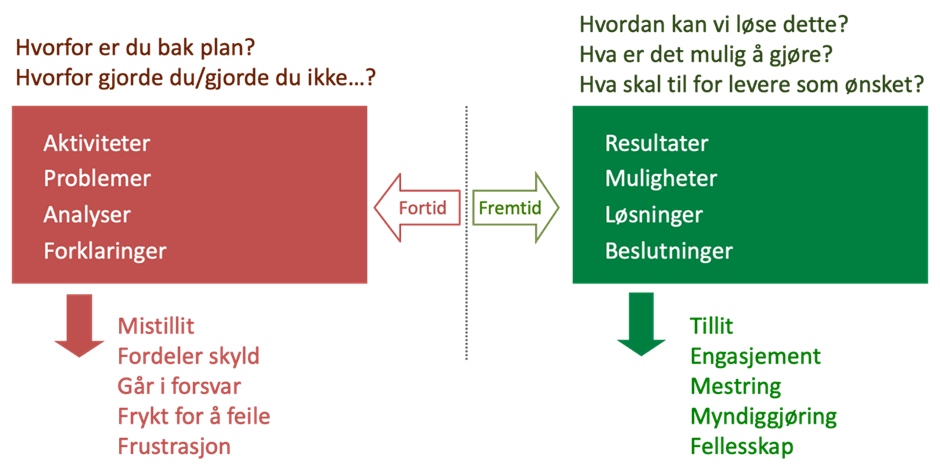
Far too many people experience these meetings as energy leaks, dreading them in advance and being happy when they are over. They are characterized by spending time on the past, on what has happened and what has not happened, and finding explanations for why.
This leads to people becoming defensive, there is an apportionment of blame and finger-pointing. Over time, this can lead to us not daring to be open about problems and being more concerned with finding (excuses). The effect is the same in any case, a downturn. We call such meetings RED MEETINGS .
The good thing is that it doesn't have to be that way! What if we change the context from control to development, from looking back to looking forward. The purpose is to use the group's combined experience and knowledge to find solutions together and make decisions that make us successful. We call these meetings GREEN MEETINGS .
Green meetings are characterized by looking forward. What has happened has happened, and at best we can learn from it. We dare to disagree with good intentions because we want each other well and want to succeed together. In green meetings we challenge each other constructively on how to solve problems by exploring the space of possibilities.
Rather than arguing for or against conclusions, we seek to understand each other's reasoning and thoughts. Constructive confrontation is a curious, inquiring communication style that aims to increase one's own understanding, presented in an inviting manner with the expectation of an honest answer and constructive outcome.
Our experience is that the threshold for engagement is lower and that everyone engages in problem solving in green meetings. Questions like: What is the best thing we can do now? What opportunities do we have and what is needed to exploit them? Can you tell us more about how you think? create engagement. They activate our shared experience in the search for the best solutions.
How can you have green meetings in your team?
Holding green meetings doesn't happen by itself. Below you will find some good advice.
Clarify the purpose of the meeting
We often see that the purpose of follow-up and reporting meetings is not defined. A practice has developed over time. All planned meetings must have a clear purpose that all participants know; “The purpose of this meeting is..”.
In ad hoc meetings, you can start by clarifying the purpose as the first point.
The purpose of project follow-up meetings can be; “ That we are more confident that the project will be a success after the meeting than we were before the meeting.
Good preparations
To achieve green meetings, good preparation is important. If there are deviations, part of the preparation is to investigate and understand the reason for the deviations. This can be explained briefly. Once the reason is understood, the next step in the preparation is to identify possible measures and decisions that are needed to solve the problems.
The same applies to risks and opportunities. As part of the preparation, consequences and proposals for measures and decisions are clarified.
The result is a good opportunity to get input on the measures that either confirm or improve them.
Meeting management
Good meeting management is crucial to achieving green meetings. We usually say; spend a maximum of 20% of the time on what has happened and 80% of the time on the future. Use the questions HOW, WHAT NEEDS TO BE DONE, WHAT IS POSSIBLE?
As the meeting leader, you have a special responsibility to keep the meeting in the green zone. If you cross into the red zone, take a time-out. At the same time, this is also a collective responsibility.
Establish driving rules and apply them
Involve the meeting participants in a discussion about what rules of the road you need to create green meetings. Here are some examples from clients we have worked with:
- Materials are sent out 2 working days before the meeting and we come prepared for the meetings.
- If someone experiences the meeting going into the red zone, raise your hand and ask for a time-out.
- We challenge each other and value direct feedback.
- “Early warning of bad news, is second best to good”
- We use the time to look forward and explore the space of possibilities.
- Everyone can ask for a time-out if we end up in a red zone leader
Train
To succeed with green meetings, you need to practice. Practice conducting green meetings no matter what type of meetings you have. Over time, you will experience that meeting time decreases, you become more constructive, which in turn leads to higher efficiency. This makes a real difference for both you and the team.
You will also see that trust and psychological security are strengthened and you will have a culture characterized by growth and development.
Good luck with your next green meetings!
And if you need help establishing a green meeting culture, contact us at Considium. We are very good at this.